The expansion trap.
Why the old growth playbook Is failing in an AI-powered world — and what Egyptian CEOs can do about it

Key Takeaways
Egyptian CEOs are twice as likely to use an expansionist growth playbook as the rest of the world, extending into new customer segments, products and markets despite volatile conditions.
This broad expansionist approach is conflicting with the current environment and what AI needs to pay off
The future-ready growth playbook requires a much tighter ideal-customer (ICP) focus, prioritizing where AI, data and talent can create more value and a bigger competitive moat over time.
Ambition meets resilience
Egyptian execs are pros at building businesses in conditions that would make a Western peer freeze. Regional unrest, currency fluctuations, a large informal economy, heavy red tape, funding scarcity: these are the normal operating environment, not occasional shocks.
As Mohamed Azab, Founder and CEO of Seha Healthcare, put it after years of navigating successive crises:
“You always have to find a way to make it work… if you are able to build a company in Egypt, I believe you can build a company anywhere.”
Like driving in Cairo, you can’t hesitate. Egyptian CEOs take on new customers, add new segments, open new markets; they keep moving, because standing still is not an option and because growth through expansion has delivered results for a long time.
PwC’s 28th CEO Survey shows how common this expansion approach has been. In the last five years, 69% of Egyptian business leaders went after new customer bases – more than double the global average. 66% developed new products. 47% tried new market routes. More than half started competing in an industry they had never entered before.
That combination of ambition and hard-earned resilience has served Egyptian CEOs well. The question now is whether the same expansion playbook still serves that ambition, or whether it’s beginning to work against it.
Rising costs and AI require a new approach to growth
A company that serves many different types of customers with many different offerings is structurally more expensive to run. And the cost of doing business continues to rise thanks to:
Increasing inflation. 63% of Egyptian CEOs say their company is highly or extremely exposed to inflation (PwC) — meaning the business has to work much harder just to stay in the same place.
Talent shortages. 78% of Egyptian companies cannot find the technical and specialized skills they need, according to the Nexford University Employer Survey. This gap is growing wider as Egypt's top professionals leave for higher wages and stable currencies in the GCC. Talent retention is key, plus the ability to accomplish more with fewer people.
Increasing customer expectations. B2B customers want faster answers, more reliable service, and better value, while still negotiating harder on price; these expectations can be even higher with GCC customers investing heavily in AI. Since different customers value different things — some need guarantees, others need a personal relationship, others want control and self-service — it’s nearly impossible to satisfy everyone. Since customer retention can be up to 9 times cheaper than acquisition, you’ll need to prioritize who to keep and invest in how to keep them.
These conditions alone require a more strategic approach to growth: retention before expansion, quality instead of quantity, going deep with fewer segments instead of going wide. And AI adds yet another reason to the mix.
AI is ideal for helping Egyptian businesses accomplish more with less money and headcount; it also has the potential to greatly improve customer experiences at a lower cost. But AI doesn’t work well inside complex, unfocused businesses. McKinsey, Bain, BCG and others confirm that companies that are winning with AI are doing two things:
Pointing AI at one or two high-value bets, making sure the entire SLT team is aligned around what will drive the business forward. Without that level of focus, it’s a bit like sprinkling it like simsim across the company; lots of small experiments and not much substance. Nothing compounds.
Cleaning up complexity first. Most processes, especially those that run across functions, are full of workarounds, manual fixes, waiting, and unclear decision-making. Layer AI on top of that and you multiply the mess. Work redesign is consistently the strongest predictor of AI payoff, and it’s easier to do in a business that’s aimed at a clear customer outcome.
AI natives are pushing these two ideas even farther, producing results that are much bigger than their size and headcount would suggest. They’re a threat for every category in every region, including emerging markets. But they’re also pointing the way forward.
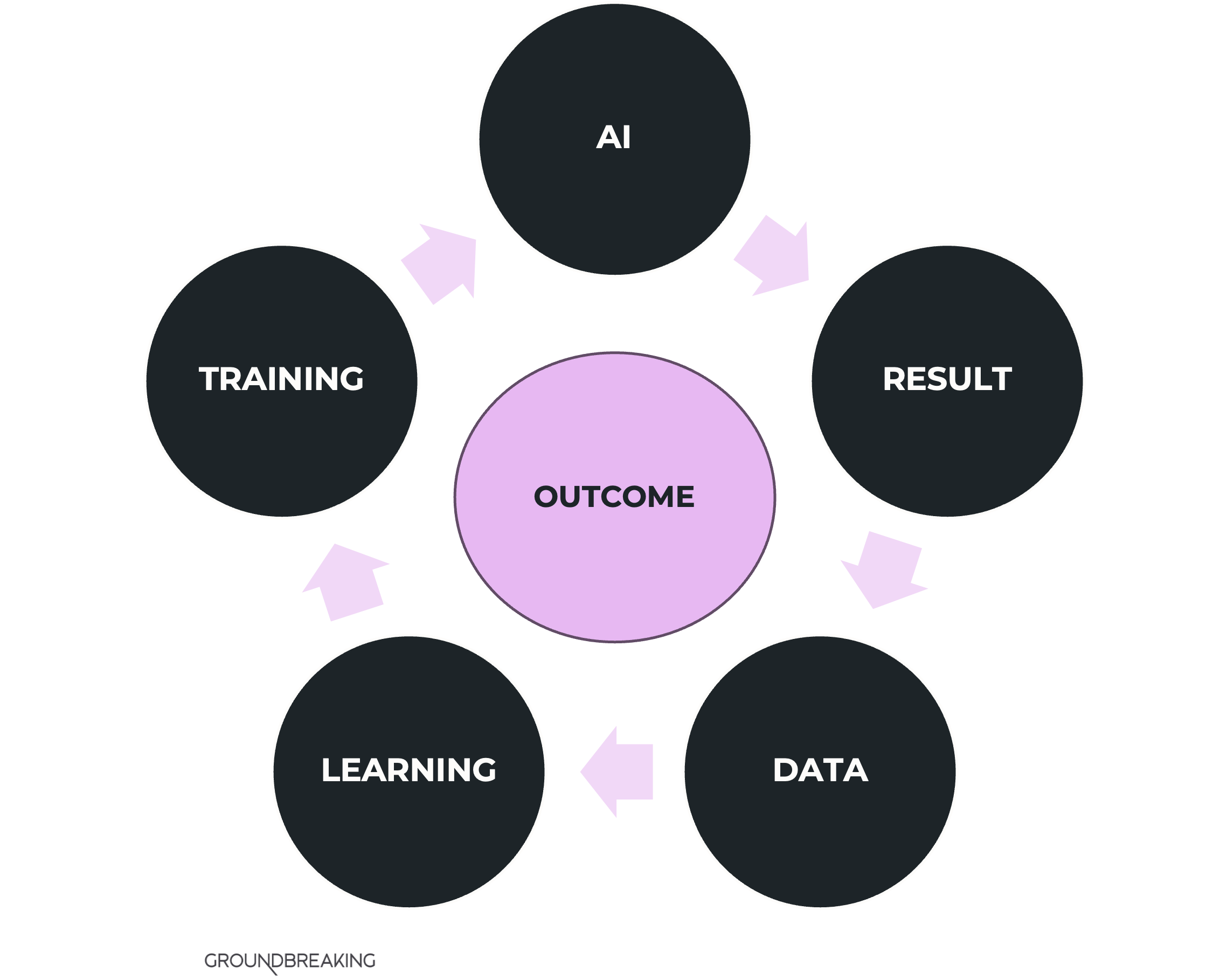
The AI-native way to compete
AI natives don’t try to serve everyone; instead they pick one ideal customer profile (ICP) and the outcome that customer values above all else. Then they align everything — people, processes, technologies — to create that value. AI and your teams get better through repetition and learning, the outcome keeps improving, and the moat gets bigger over time.
The “Value first” approach to growth
Most businesses still define themselves by category, which is accurate but vague, undifferentiated, and easy to disrupt. It’s essential for execs to create a competitive moat designed to attract, keep and protect your most valuable customer segments.
Leading enterprises and AI natives both do this by following a “value first” playbook: shifting from what they do to the value they create, then investing in creating that value consistently over time. If this sounds familiar, it’s because it is. It’s the Lean approach invented by Toyota 75 years ago, applied to business growth and transformation.
These three companies show that this approach pays off.
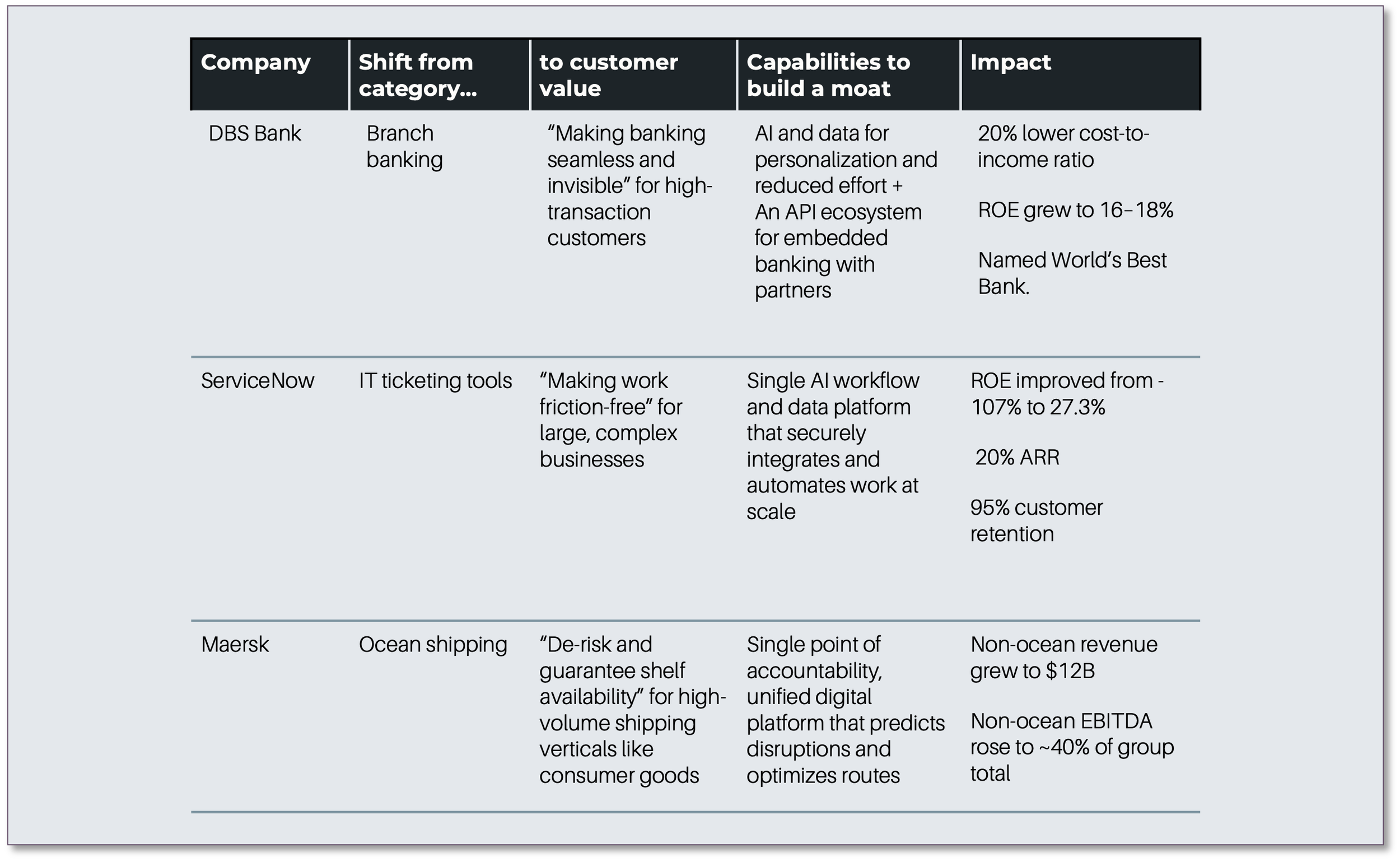
Look at what changed: these companies didn't simply add products or enter new markets. They got clearer on the value they create for a particular customer, and then built capabilities to deliver it.
How Egyptian CEOs can apply this playbook.
Shift from going wider to going deeper. You don’t have to stop serving your current customer mix. Just go deeper with the segment that you can’t afford to lose; as you build capabilities to keep them, you’ll attract more just like them. To find your ICP, these questions are a good starting point:
Which 20% of your customers create 80% of your revenue?
Of these 20%, how many different outcomes can you identify? Companies of the same size in the same sector can have different needs and priorities; these differences hold the key to your moat, because they require specialized capabilities to solve them. Choose the customer outcome that best fits with your business and vision.
Focus on the bottom of your funnel, not the top. For your most important customer segment, what is your churn rate and customer lifetime value? Why might you lose this specific kind of customer? Fix the holes in the bottom of your revenue bucket so that every additional purchase and customer fills it up more, instead of replacing what has leaked out. Otherwise, your leaks get very expensive.
Prioritize investments. To deliver the outcome that’s valued most by your priority customer, what capabilities do you need? How could AI and data improve your customer experience and make it easier and cheaper for you to create that value over time?
Reduce complexity debt before adding AI. It’s easiest to redesign work in stages; start with a key customer lifecycle stage like onboarding that’s messy to deliver internally, and recruit a cross-functional team to redesign it. Then add AI to make that end-to-end workflow even faster and more efficient.
Create your flywheel, then expand. As you tackle the steps above, you’ll start seeing real improvements in customer lifetime value, margins, and capacity freed to serve more customers without adding headcount.
Now you’re ready to take more share in your current region and expand into new geographies.
Yes, this means pausing your expansion efforts until you’ve built a strong, efficient foundation, but over time your results will compound until no one can catch you. It’s the lean approach to AI-powered growth in markets like Egypt where you can’t afford the luxury of waste.
Next step
The Value-First Strategy Session is for ambitious Egyptian CEOs who need to grow and don’t have the luxury of waste. In 90 minutes, we'll identify your priority customer and the outcome they value most—using customer analysis plus my B2B “motivational cheat codes”, developed through 30 years of researching the outcomes that predict purchase and loyalty. From there, you'll have a much clearer view of where your growth and AI bets should go. Only 5 sessions will be offered at a discounted founding rate. Message me at jen @ begroundbreaking.co for details.
Sources:
https://www.pwc.com/m1/en/ceo-survey/28th-ceo-survey-middle-east-findings-2025/egypt-findings.html
https://www.nexford.edu/insights/skills-shortages-in-egypt-leaves-companies-at-a-disadvantage
https://www.cydcor.com/media/blogs/customer-acquisition-and-retention-strategies-cdr#
https://www.mckinsey.com/capabilities/quantumblack/our-insights/the-state-of-ai